
March 24, 2026

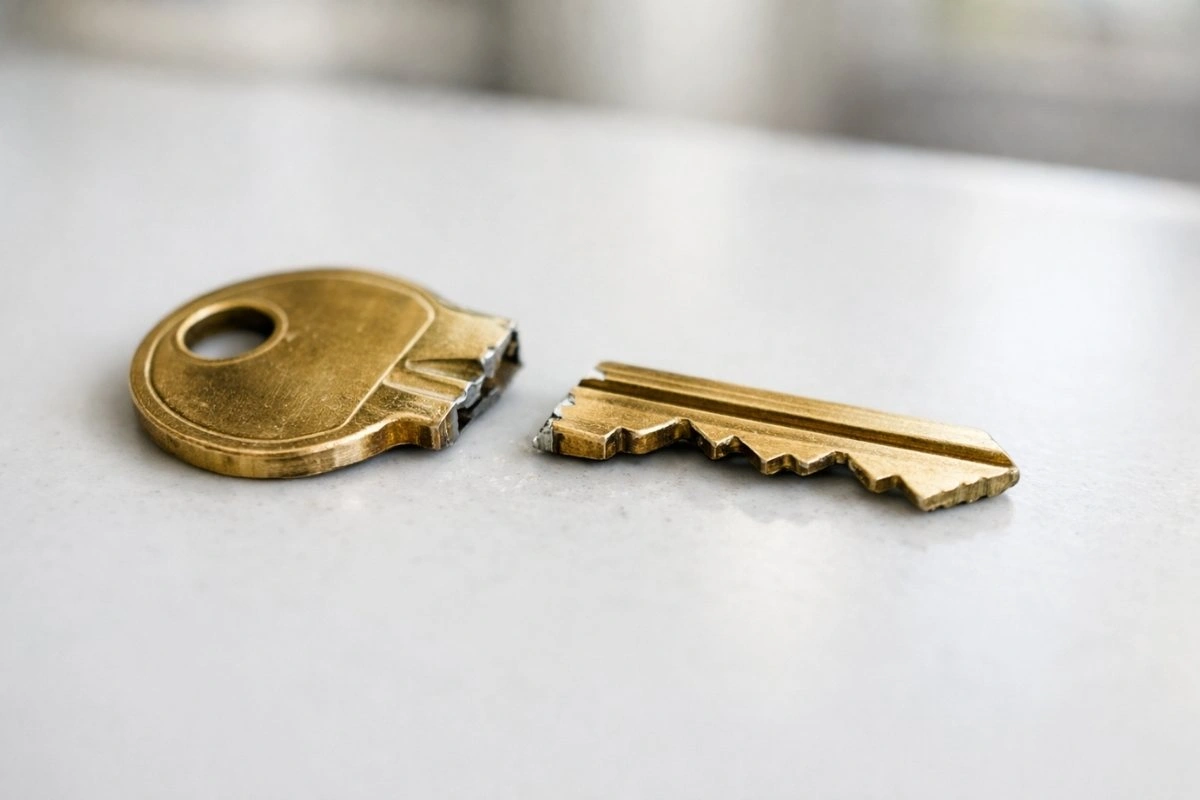
Yes, a locksmith can make a key from a broken key in most situations. If the broken pieces have enough of the original cut pattern (called the bitting) still visible, a professional can align the fragments and cut a new key. Even when pieces are missing, a locksmith can decode the lock itself or use the key code stamped on the original to create a replacement. The process takes 15–60 minutes on-site for standard house keys and costs roughly $18 on average for the key alone, according to Locksmith Ledger’s 2024 National Average Price Survey.
A locksmith can make a key from a broken key by piecing together the original fragments, decoding the lock’s pin configuration, or cutting to the manufacturer’s key code. Standard house keys run $5–$15 for duplication, while car transponder keys cost $100–$400 depending on programming needs.
That said, not every broken key scenario plays out the same way. The type of key, where it broke, and whether pieces are stuck inside the lock all change the process and the price. I’ve watched people turn a $50 extraction into a $500 lock replacement by trying to fish out the broken piece themselves with tweezers. Don’t be that person.
This article won’t cover smart locks or keyless entry systems. Those are a different animal entirely. We’re focused on physical keys: house keys, car keys, and restricted/patented keys.
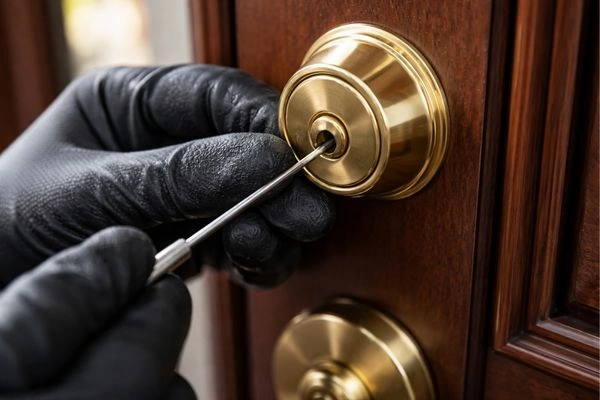
Get the broken piece out first. You can’t copy what’s jammed inside a deadbolt.
Professional extraction typically costs $50–$200 depending on your area, according to Angi’s 2025 locksmith pricing data. A certified locksmith handling the extraction uses a specialized hook-style extractor tool that slides along the key’s grooves and pulls the fragment out without damaging the pins or cylinder.
Here’s the contrarian take that most locksmith articles won’t tell you: the extraction itself is usually the cheap part. The expensive mistake is what happens before you call a pro. People jam screwdrivers, pliers, and even superglue into the keyway trying to pull the fragment out themselves. That pushes the broken piece deeper and damages the pins. Now you’re looking at a full cylinder replacement ($150–$500+) instead of a simple extraction.
Once the broken key is out, the locksmith has two options. They can piece the fragments together in the duplicator and cut a fresh key. Or, if the pieces are too damaged, they can decode the lock on-site and cut to the factory code. The code-cut method produces a more accurate key that lasts longer than a copy-of-a-copy.
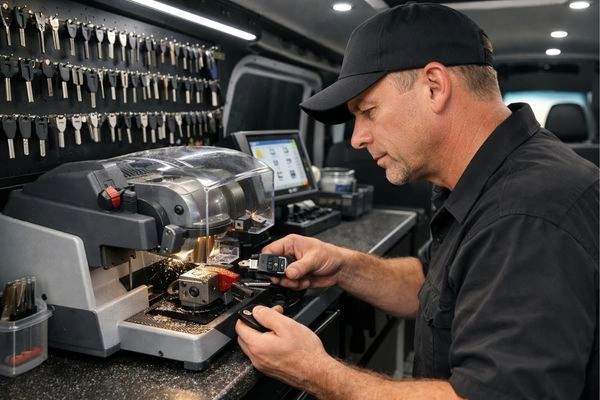
Car keys are where it gets more complicated and more expensive.
For a basic mechanical car key (no chip, no fob), the process is the same as a house key. Align the broken pieces, cut a new blade, done. Cost runs $50–$150 through a locksmith versus $200–$400+ at a dealership.
But most cars built after the late 1990s use transponder keys with an embedded chip that communicates with the vehicle’s immobilizer. The blade and the chip both need to work, or the car won’t start. According to the Bureau of Labor Statistics, roughly 15,550 locksmiths were employed in the U.S. as of May 2024, many of whom now specialize in automotive electronic key programming. This reflects how much the trade has shifted toward tech-heavy work.
The first thing a locksmith checks is whether the transponder chip survived the break. If it did, they can transplant the chip from the broken key housing into a new one and cut a fresh blade. Total cost: $150–$400 depending on the vehicle.
If the chip is cracked or destroyed, it can’t be copied. But that doesn’t mean you need to go to the dealer. A qualified automotive locksmith can program a new transponder to your vehicle’s immobilizer. It costs less than half what most dealerships charge.
I’ve seen people assume the dealer is the only option for chipped keys. It’s not. A good independent locksmith with the right programming equipment can handle roughly 90% of makes and models. The dealer route runs $350–$700 for the same job.
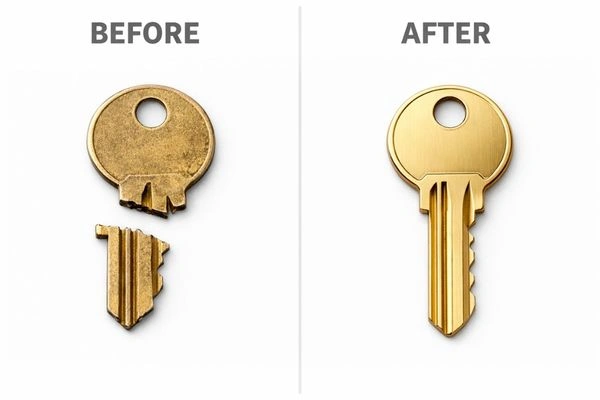
Both halves help, but only one half is truly needed.
The blade side (the part with the cuts and grooves that goes into the lock) is what matters. If you have that piece, even if it’s 50–70% of the full blade, most key machines can read the bitting pattern and produce a copy. Multiple experienced locksmiths on professional forums confirm a high success rate with half-key copies when enough of the cut pattern is intact.
If you only have the bow (the handle end), the locksmith can still make a key. They’ll just need to work from the lock itself using impressioning or decoding, which adds labor time and cost. For a standard residential lock, that might add $20–$50 to the job.
Quick breakdown:
| Scenario | Difficulty | Typical Added Cost |
| Both halves available | Easy | $0 extra |
| Blade half only (50%+ bitting) | Easy | $0 extra |
| Bow half only (no bitting) | Moderate | $20–$50 extra labor |
| No pieces at all | Harder | $30–$75 extra (decode/impression) |
Worth noting: if your key snapped because of metal fatigue or a worn lock, the locksmith should check the lock too. A key that broke once will break again if the cylinder is corroded or the pins are binding. Having a residential locksmith assess the whole setup saves you a repeat visit.
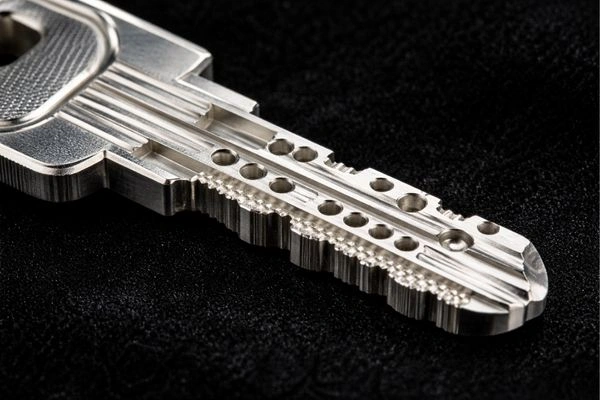
Yes, but not by everyone.
Patented keys have built-in anti-duplication features: side milling, dimple cuts, magnetic elements, or proprietary blank profiles. Your local hardware store kiosk won’t have the blank, and even if they did, their machine can’t cut it. According to the Associated Locksmiths of America (ALOA), restricted key systems require authorized dealers or certified master locksmiths with specialized cutting equipment.
Here’s what the manufacturers don’t advertise: the restriction is about access to blanks, not about technical difficulty. A Certified Master Locksmith (CML) with the right blanks and authorization can copy most patented keys. The issue is finding someone who carries your specific brand.
And while we’re on the topic, those “Do Not Duplicate” stamps on standard keys? They carry zero legal weight. ALOA has stated publicly that the marking is advisory only. Any locksmith with the correct blank can copy it. If you’re relying on a stamp for security, you need an actual restricted key system instead.
Patented key duplication typically runs $20–$100 for the key itself, plus any service call fees. The total might hit $150–$250 if the locksmith needs to verify ownership with the manufacturer or confirm proof of authorization.
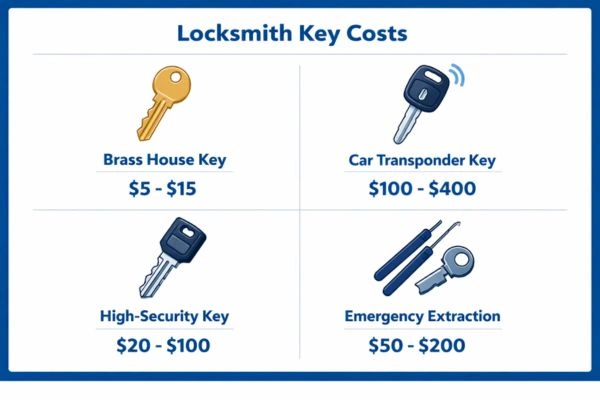
Costs vary depending on the key type and whether extraction is involved. Here’s what the national averages look like based on 2025–2026 data from Angi and HomeAdvisor:
| Service | National Average Cost |
| Standard house key from broken pieces | $5–$15 |
| High-security/patented key copy | $20–$100 |
| Broken key extraction (if stuck in lock) | $50–$200 |
| Car transponder key (cut + programming) | $100–$400 |
| Full service call (extraction + new key + trip fee) | $100–$300 |
| Emergency/after-hours service | Often double standard rates |
If you’re in a major metro area (Northeast, West Coast), expect 20–50% premiums on these numbers. Rural areas tend to have lower base rates but add $50–$100+ in travel fees.
The biggest money-waster I see? People calling unlicensed “mobile locksmith” services that advertise $19 service calls on Google. Those bait-and-switch operations have been widely documented by consumer protection agencies, with final bills hitting $500–$1,000. Always verify the locksmith is licensed (in states that require it), insured, and ideally backed by a team that understands your local market.
Questions consumers almost never ask but should: “Are you state-licensed and insured?” “Will you cut to the factory code or just duplicate the broken pieces?” “What’s the exact service fee versus the per-key charge?” And the big one: “Do you guarantee the fit?”
Reputable ALOA-certified locksmiths typically offer a 30–90 day warranty on key fit and labor. If yours doesn’t, that’s a red flag.
How much of a broken key does a locksmith need to make a copy?
A locksmith needs at least 50–70% of the blade’s bitting pattern (the grooved cuts) to make a copy on a standard duplicating machine. If you have less than that, the locksmith can still produce a key by decoding the lock itself or cutting from the manufacturer’s key code. Both fragments help speed up the process, but the blade side is the only one that’s truly required.
Can a locksmith make a car key from just the broken blade?
Yes. The mechanical cut can be duplicated from the broken blade alone. If your car uses a transponder key, the locksmith will also need to program a new chip, which adds $100–$250 to the job. Total cost through a locksmith runs $150–$400 versus $350–$700 at a dealership for the same service, based on 2025 Angi and HomeAdvisor averages.
What should you do if the broken key is stuck inside the lock?
Don’t try to pull it out yourself. Professional extraction costs $50–$200 and takes 15–30 minutes. DIY attempts with pliers or screwdrivers often push the fragment deeper and damage the lock’s internal pins. That can turn a simple extraction into a full cylinder replacement costing $150–$500+.
Will a hardware store kiosk copy a broken high-security key?
No. Hardware store kiosks and big-box retailers only carry standard key blanks. High-security, patented, laser-cut, and restricted keys require specialized machines and authorized blanks that only licensed locksmiths carry. Expect to pay $20–$100 for the key itself from a qualified pro.
Do “Do Not Duplicate” stamps actually prevent locksmiths from copying keys?
No. The Associated Locksmiths of America (ALOA) treats “Do Not Duplicate” markings as advisory only. Any locksmith with the correct blank can legally copy the key. The stamp carries no legal enforcement in the United States. If you need true copy protection, invest in a restricted key system with patent-backed blank control.


