
March 24, 2026

Residential locksmiths can install deadbolts (single-cylinder, double-cylinder, and lockable thumbturn), knob locks, lever handle locks, smart locks, keypad locks, mortise locks, padlocks, cam locks, and jimmy-proof deadbolts. For maximum home security, Grade 1 or Grade 2 deadbolts should be installed on all exterior doors, as knob locks alone can be bypassed in seconds.
Choosing the right door lock directly determines your home’s vulnerability to break-ins. A basic knob lock on an exterior door can be compromised within moments, yet many homes still rely on this inadequate protection as their only defense. Understanding which lock types provide genuine security and which are suitable only for interior applications is essential for protecting your property and family.
The American National Standards Institute (ANSI) alongside the Builders Hardware Manufacturers Association (BHMA) evaluate locks according to durability and resilience, guiding property owners toward selecting the proper protection level for their entryways.
Grade 1 mechanisms provide maximum strength engineered to endure one million operations for doorknobs and levers, or 250,000 operations for deadbolts, plus withstand 10 impacts at 75 pounds of pressure. Grade 2 deadbolts manage 150,000 operations and resist 5 impacts at 75 pounds of pressure, proving adequate for most residential uses. Grade 3 deadbolts must survive 100,000 operations and resist 2 impacts, designed mainly for internal doors or locations requiring basic security.
When acquiring new locks, verifying these ANSI/BHMA classifications guarantees you obtain authentic protection, not merely operational door hardware.
Need professional lock installation or security upgrades? Contact Keyway for expert residential locksmith services tailored to your home’s specific security requirements.
Deadbolts deliver simplicity combined with durability: a rigid metal bolt extends approximately one inch into your doorframe. No springs, no complications purely metal preventing forced intrusion. For exterior entryways, a deadbolt provides the actual security protecting your residence.
These rank among the most prevalent lock varieties. You operate a key externally, with a thumb turn internally for rapid departure. The bolt secures completely into the strike plate, unlike knob mechanisms that depend on spring latches and face easy compromise.
Ideal for: Primary entrances, rear doors, or any external door lacking adjacent glass.
Installation: Expert installation guarantees the bolt aligns flawlessly; misalignment can degrade the lock and diminish security capabilities over time. If your deadbolt shows wear or operates roughly, Keyway provides repair services to restore its durability and dependability.
Vulnerability: When glass sits near the door, intruders can reach through and rotate the thumb turn, so evaluate a different cylinder mechanism.
Double cylinder deadbolts demand a key on both sides, preventing reach-through breaches. Excellent for doors featuring glass panels or sidelights.
Safety consideration: You require a key for exit, which poses challenges during emergencies. The International Residential Code mandates that egress doors be readily openable from inside without key usage, which typically prohibits double-cylinder deadbolts on residential egress doors. Consult with local building authorities before installation.
When to implement: Certain commercial environments where code allows, or doors with adjacent glass where building regulations permit. Always confirm local standards.
A combination solution. Typically, the thumb turn enables swift exit, but you can secure it with a key for enhanced protection practical when traveling or for doors with accessible glass.
Ideal for: Doors where you desire the adaptability of both single and double-cylinder security without code infractions.
Grade 1: Ultimate security for entry doors, withstands significant attack efforts. Perfect for primary entrances and high-security applications.
Grade 2: Suitable for most residences, still robust and economical for residential entry doors.
Grade 3: Exclusively for interior doors; inappropriate for front doors or high-risk entry locations.
Deadbolts function effectively alongside sliding bolt mechanisms, chain locks, or as an additional layer when purchasing locks for your residence. According to Minneapolis crime prevention guidelines, proper door security is your first line of defense against break-ins.
Ready to upgrade your home security? Contact Keyway for professional deadbolt installation and expert advice on the best lock solutions for your property.
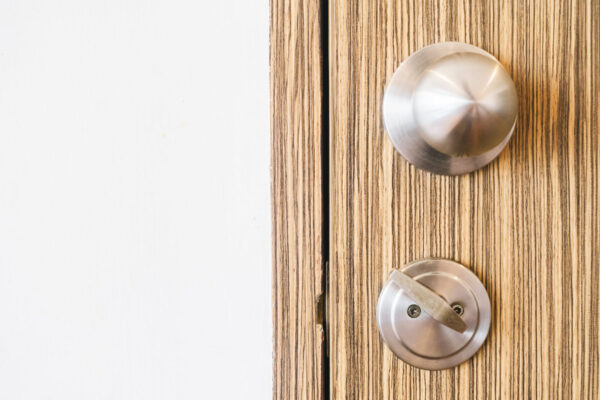
Knob locks employ a basic spring-loaded latch extending from the door edge into the frame. Rotate the knob, and the latch withdraws.
Simple to use and budget-friendly, but equally simple to defeat. The latch can be pushed back with little effort, and the knob itself can be shattered with bolt cutters or even brute force.
Knob locks must never serve as the sole lock on an external door, a frequent security problem in aging residences. They perform best for:
Avoid depending on knob locks exclusively for entry doors or any external door locks safeguarding your residence.
If your exterior doors feature only knob locks, incorporating a deadbolt represents the easiest method to strengthen security. Many aging homes still utilize knob-only entry configurations.
Keyway’s experienced team assists homeowners with installing new locks, adapting modern security into older doors, and adjusting for irregular door frames. This introduces an additional layer of defense while maintaining daily access convenience.
Lever locks replace round knobs with handles you push down, making them simpler to operate with occupied hands or reduced grip capacity. That’s why they’re prevalent in commercial structures and contemporary homes.
Most still utilize a spring-loaded latch, so their security capabilities resemble knob locks. They’re also ADA-compliant and available in multiple styles to coordinate with your door hardware.
The spring latch represents the vulnerability, so on exterior doors, lever locks must always pair with a deadbolt. High-security variants exist with Grade 1 classifications, strengthened latches, and anti-pry features, delivering superior protection but even these gain from an additional deadbolt on entry doors.
Lever locks are suitable for:
They shouldn’t serve as the exclusive lock type on any external door, as the latch remains the vulnerability.
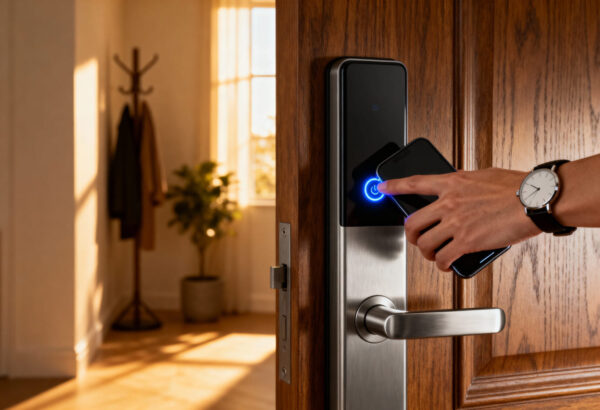
Contemporary smart security is characterized by the newest door lock varieties offering keyless access, such as through fingerprint, remote surveillance, and the supreme convenience of smartphone control.
Smart locks utilize WiFi, Bluetooth, or Z-Wave to link to your home network. You can secure or release doors through smartphone applications, access via pin codes, fingerprints, or smartphones, and even integrate them with smart home platforms for enhanced convenience. The National Institute of Standards and Technology (NIST) provides guidelines for implementing secure smart home technologies.
Smart lock varieties:
Smart locks eliminate physical key requirements and allow you to generate temporary access codes for contractors, visitors, or dog walkers. You can track activity with logs displaying who entered when, utilize auto-lock capabilities, and depend on Keyway’s 24/7 emergency locksmith services if technical problems emerge.
For most digital locks, battery duration spans from 10 months to a complete year under typical use, though WiFi-connected smart locks may only endure 3-6 months if operated frequently, while Bluetooth, Z-Wave, or Zigbee models typically achieve 10-18 months or longer.
Concerns to evaluate:
If you’re locked out and your smart lock malfunctions, contact Keyway’s locksmith services in Afton or surrounding areas; they provide 24/7 emergency assistance.
Keypad locks enable you to input a pin code to release doors—no keys or smartphone required. Mechanical versions employ purely physical mechanisms, while electronic versions are battery-operated with additional features like multiple codes or temporary lockouts.
Perfect for:
Keypad locks arrive in two primary varieties, each offering distinct benefits and considerations.
| Feature | Electronic Keypad Locks | Mechanical Keypad Locks |
| User Codes | 10+ codes, simple to add or remove | Limited codes, more difficult to modify |
| Power | Battery-operated | Completely mechanical, no batteries |
| Extras | Activity logs, temporary codes, and lockouts | Exceptionally durable, minimal maintenance |
Both varieties deliver keyless convenience, so select the option that best matches your residence’s requirements and lifestyle.
Mortise locks feature their lock mechanism embedded within the door edge, unlike contemporary surface-mounted cylinder locks. This concealed mechanism renders them exceptionally durable and secure. They frequently include multiple locking points and are prevalent in historic homes and commercial structures.
You’ll discover mortise locks in historic residences (pre-1950s), office structures, storefronts, and other high-security uses. Many original locks continue functioning after decades with appropriate care.
Many mortise locks can be serviced or rekeyed, conserving money while preserving historic hardware. Replacement becomes necessary only if the lock mechanism is fractured, severely degraded, or if contemporary security enhancements are wanted.
Whether you need service in Albertville, Andover, or surrounding communities, Keyway consistently assists homeowners in balancing maintaining old locks with upgrading to new locks for improved security.
Padlocks deliver portable security for gates, storage facilities, and sheds. They span from budget options easily served with bolt cutters to high-security models featuring hardened steel shackles.
For valuable possessions, investing in a quality padlock guarantees superior protection.
Cam locks are compact cylinder locks present in filing cabinets, mailboxes, and lockers. A flat metal “cam” pivots when you rotate the key, engaging on a strike. They’re minimal-security but practical when you simply need to keep items closed rather than secured from forced intrusion.
Prevalent in apartments and historic buildings, jimmy-proof deadbolts employ interlocking vertical bars instead of bolts extending into the door edge. When activated, the two components interlock, preventing prying attempts. They aren’t pick-proof or kick-proof, but deliver solid additional security when correctly installed.
Many pre-1950s homes have non-standard door thickness, mortise locks, and vintage hardware. Keyway’s locksmith services in Anoka and surrounding areas specialize in adapting modern door locks to these older systems while preserving historic aesthetics.
Frozen locks are common in winter conditions. Choosing locks with weather-resistant features and proper lubrication (graphite-based lubricants work better than general-purpose oils in cold weather) helps prevent issues with cylinder locks and external door locks. The Department of Homeland Security (DHS) recommends regular maintenance of security hardware to ensure optimal performance year-round.
Keyway installs entry doors, storm doors, and garage doors, ensuring door hardware works correctly with steel, fiberglass, wood, and aluminum doors.
Crime patterns vary by location; Keyway recommends the right security levels for external and interior doors, from historic downtown properties to rural homes. According to SafeHome security research, proper lock selection significantly reduces home break-in risks. For downtown area security considerations, the Minneapolis Downtown Improvement District provides additional safety resources.

DIY-Friendly:
Call a Professional:
Why professional installation matters: Proper alignment of bolts, strike plates, and door edge positioning ensures your locks function correctly and maintain warranty coverage. A professionally installed Grade 2 deadbolt can be more secure than a poorly installed Grade 1 lock.
Lock Installation: Deadbolts, smart locks, high-security locks, lever handles, and other locks are installed properly for the first time.
Rekeying Services: Update keys for new homeowners or lost keys; combine multiple locks to one key for convenience.
24/7 Emergency Lockout Service: Residential and commercial lockouts available around the clock.
Lock Repair: Mortise locks, cylinder locks, stuck or broken locks, frozen locks—repair when replacement isn’t necessary.
Security Consultations: Free estimates and practical security recommendations based on years of experience.
Need help choosing or installing locks? Learn more about Keyway’s services and discover why we’re the trusted choice for Minneapolis homeowners.
Recommended Configuration:
Security Priority: Maximum
Front, back, and side doors are your first line of defense. If these doors only have knob locks, adding quality deadbolts instantly boosts security. The Minneapolis Public Safety department emphasizes that proper entry door security is critical for home protection.
Recommended Configuration:
Purpose: Weather protection and secondary security layer
Recommended Configuration:
Security Priority: Privacy, not break-in protection
Simple locks provide enough privacy without overcomplicating access.
Recommended Configuration:
Security Priority: High
Garages are common break-in points. Secure doors connecting garages to the home as you would your main entry doors. The Minneapolis Community Safety initiative identifies garage access as a frequently overlooked security vulnerability.
According to Minneapolis Emergency Preparedness guidelines, maintaining secure locks is essential for home safety readiness.
Homeowners frequently question whether rekeying or replacing locks is the superior choice. Here’s a quick comparison to help you decide.
| Feature | Rekeying | Replacing |
| What it is | Changing internal pins to work with new keys | Install new lock hardware |
| Best for | Good locks, lost keys, standardizing to one key | Damaged locks, upgrading to Grade 1 or higher quality locks, adding deadbolts and smart locks |
| Benefits | Cost-effective, fast, and maintains the existing locking mechanism | Provides additional security, new key-operated locks, access to popular brands and modern features |
Both options improve home security; choose rekeying for convenience and cost savings, or replacement for higher security and updated hardware.
Selecting appropriate door locks represents one of the most critical decisions for protecting your property and family. From understanding ANSI/BHMA security grades to choosing between deadbolts, smart locks, and keypad systems, each lock type serves specific security needs and lifestyle requirements. Whether you’re upgrading outdated knob locks on exterior doors, installing high-security deadbolts for maximum protection, or modernizing with smart technology for keyless convenience, the right combination of locks creates multiple layers of defense against unauthorized entry.
Professional installation ensures proper alignment, functionality, and warranty coverage making even a Grade 2 lock more effective than a poorly installed Grade 1 alternative. Don’t compromise your home’s security with inadequate or outdated locking mechanisms. Contact Keyway today for expert guidance, professional installation, and comprehensive security solutions tailored to your home’s unique needs. Check out our customer testimonials to see how we’ve helped homeowners secure their properties, or visit our blog for more security tips and insights.
Grade 1 locks offer maximum security with the highest durability standards, enduring one million cycles for knobs and 250,000 for deadbolts while resisting 10 strikes at 75 pounds of force. Grade 2 locks provide adequate residential protection with 150,000 cycles and resistance to 5 strikes, making them cost-effective for most homes. Grade 3 locks are designed only for interior doors with minimal security needs, withstanding just 100,000 cycles and 2 strikes.
While replacing existing locks with identical prep holes can be DIY-friendly, installing new deadbolts especially on solid-core doors or historic properties requires professional expertise to ensure proper alignment and security. Misaligned bolts, incorrectly positioned strike plates, or improper door edge drilling can compromise your lock’s effectiveness and void manufacturer warranties. Professional installation guarantees your deadbolt functions correctly and provides the security level it’s rated for.
Smart locks from reputable brands like Schlage, Kwikset, Yale, and August offer robust security when properly installed and maintained, combining physical deadbolt protection with encrypted digital access. They provide advantages like temporary access codes, activity logs, and remote monitoring while eliminating risks associated with lost or copied physical keys. For maximum protection, choose smart deadbolts with Grade 1 or Grade 2 ratings and keep firmware updated to address any cybersecurity vulnerabilities.
Always rekey or replace locks immediately when moving into a new home since previous owners, contractors, real estate agents, or maintenance workers may still possess keys. Rekeying is the cost-effective option if existing locks are in good condition and meet current security standards, allowing you to maintain the same hardware while changing the key configuration. Replace locks entirely if they’re outdated, damaged, rated Grade 3 or lower on exterior doors, or if you want to upgrade to smart locks or higher-security options.
Knob locks use spring-loaded latches that can be easily bypassed with minimal force, credit cards, or simple tools, making them completely inadequate as standalone security for exterior doors. The knob itself can be broken off with bolt cutters or brute force, providing virtually no protection against determined intruders. Always pair knob locks with Grade 1 or Grade 2 deadbolts on all exterior doors front, back, and side to create effective security against break-ins.


